Clients struggling to share access to their
Google Search Console
accounts? Get the access you need in minutes with a free trial of Leadsie.
14 day unlimited free trial
Extend until you onboard a client
No credit card required
Keep access to clients if you cancel


With easy one-link access requests for 13+ platforms your campaigns can go live in minutes, not days. Start free today.
Approved by Meta, Google & Tiktok
Keep access to clients' accounts if you cancel
Secure & 100% GDPR compliant


Google Search Console mainly focuses on SEO and site performance, whereas Google Analytics is about overall web analytics. Both are indispensable for digital marketing, but in what ways exactly?
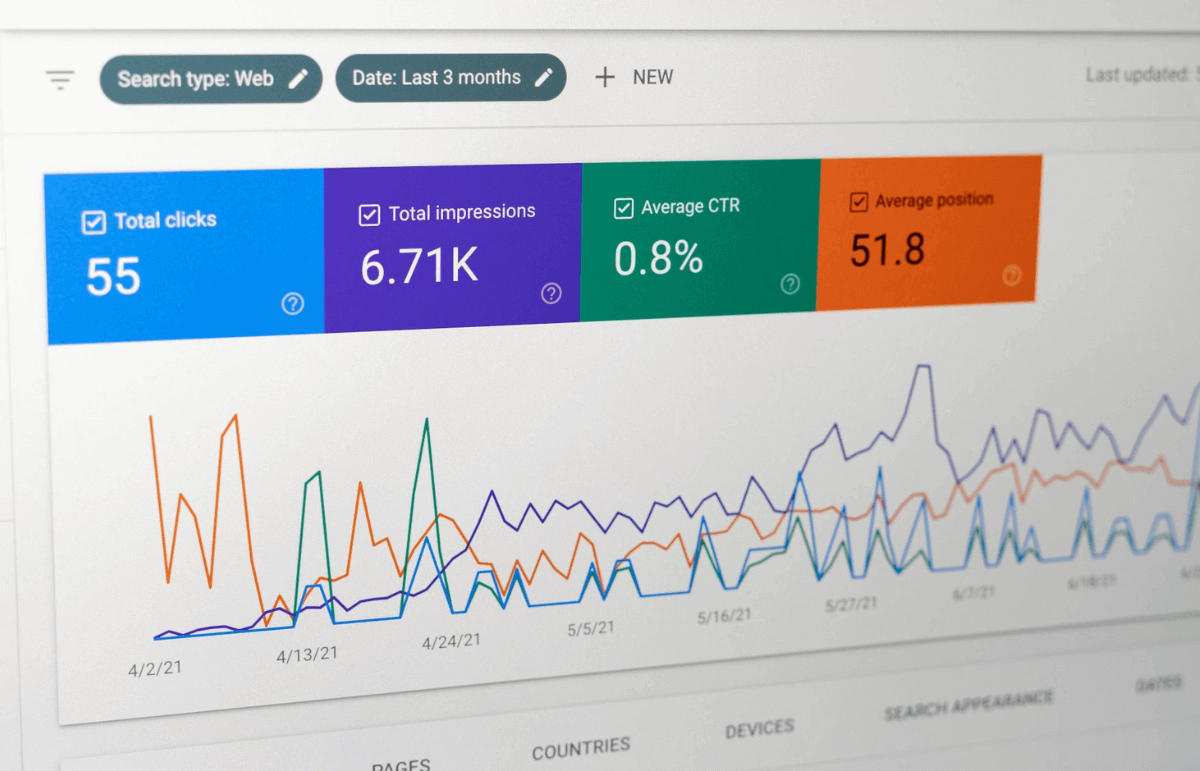
Google Search Console (GSC) is a free web service that offers various tools and reports on how search engines interact with a website.
While it can’t compensate for poor marketing, it does reveal how Google crawls, indexes, and serves your website to users. Understanding how a site is doing on Google is essential for identifying areas of improvement and attracting more relevant search traffic.
Google Search Console offers a suite of features to help users monitor and enhance their website's visibility and performance in Google search results:
Even if you are a beginner without SEO knowledge, you can log on to Google Search Console and pick out some valuable information immediately. It’s useful for anyone keen on monitoring a website’s performance on Google’s search engine results.
Google Search Console users include marketers, web developers, SEO specialists, business owners, and marketing agencies.
Learn more: How to Get Access to Google Search Console
Google Analytics (GA) is a web analytics tool that tracks and measures user interaction with your website at the granular level.
It collects a wide range of data, such as referral sources, bounce rate, geographic location of website visitors, session duration, and even the type of device used to access your website.
The latest iteration, Google Analytics 4 (GA4), launched in 2020, reigns supreme as the internet's most popular web analytics platform (did we already mention that it’s free, too?)
If your goal is to understand how visitors interact with and behave on your website, Google Analytics is the perfect platform for you.
Learn more: How to Create a Google Analytics Account
Google Analytics offers a range of features that can help users optimize their marketing efforts:
Google Analytics's users are similar to those of Google Search Console: SEO professionals, business owners, website owners, marketers, content creators, e-commerce businesses, and digital marketing agencies.
Learn more: 🔗 How to Request Access to Google Analytics
🔗 How to Give Access to an Google Analytics account
New users can easily confuse Search Console and Analytics due to their similar names and shared Google origin. The slight overlap in data they provide can add to this confusion, making it difficult to differentiate their core purposes.
To avoid using the wrong tool for the job or under-utilizing their features, let’s take a look at their key differences:
Both provide valuable insights in their own ways.
Search Console: Primarily for monitoring and maintaining a website's presence in Google Search results. It helps website owners understand how Google views their site and identify issues impacting their search visibility.
Analytics: Focuses on understanding user behavior and interactions on your website.
Overall, Google Analytics collects more data than Google Search Console. This is because it is designed to offer a comprehensive view of user behavior on a website. In contrast, Search Console more narrowly focuses on search-related metrics.
Search Console: Offers a search engine-centric view of your site and keyword data.
Analytics: It provides a user-centric view of your site that is more focused on web events and audiences.
Can you spot the differences? One is narrowly designed around search, while the other centers on online user behavior.
Search Console:
Metric relevant to search rankings and performance in Google. Impressions, clicks, click-through rate (CTR), average position in search results, crawl errors, index status, and security issues.
Analytics:
Metric relevant to audience insights and user behavior on your website. Page views, sessions, bounce rate, average session duration, traffic sources, conversions, goal completions, and user demographics.
NOTE: ‘Clicks’ are measured slightly differently in Google Search Console and Google Analytics. Google Search Console counts multiple clicks on a link within the same browsing session. In contrast, Google Analytics only counts one click per session, making it more accurate for tracking unique user actions.
Google Search Console and Google Analytics have different reporting capabilities.
Search Console:
Analytics:
💡 It is also important to note here that Google Search Console does not include non-HTML views in the click count. In contrast, Google Analytics considers all types of views in its key metrics.
Search Console: Does not rely on JavaScript to function, so ad blockers are not a big deal.
Analytics: GA relies on JavaScript to function. This means that websites that don't have JavaScript or users who have disabled it in their browsers will impede the data collection process for GA.
Search Console: Actively monitors and reports security issues. It offers detailed reporting on crawl errors and a website's index status. Automatically filters out bot activity and creates specific reports on it.
Analytics: It has limited security monitoring, which is not its focus. It filters out bots to some extent (no detailed reports on it).
A query is a search or data-related request.
Search Console: GSC limits queries to 1,000 URLs daily. Data is typically updated every 24-48 hours. A query here refers to data on search queries in search engines.
Analytics: GA can report on an unlimited number of URLs. Data is updated often, almost in real-time. A query here refers to data requests on website traffic and user behavior.
Search Console: Provides a Page Experience report that evaluates factors such as Core Web Vitals, page load speed, visual stability, and mobile usability.
Analytics: Does not provide specific metrics on user experience.
Search Console: Offers limited customization options for reports and the dashboard. The reporting time zone is fixed at Pacific Daylight Time (UTC-07:00).
Analytics: Provides extensive customization options, allowing users to create tailored reports, layouts (views), widgets, and dashboards. Allows you to select any time zone in property settings.
GA has more integration options compared to GSC.
Search Console: It can be linked with Google Analytics to gain additional insights. Fewer integration options compared to GA.
Analytics: Can be integrated with various other Google products, such as Google Ads and Google Search Console, for a more holistic view of marketing performance.
💡 Pro tip: Integrating both tools with your Google Ads account gives you a comprehensive overview of your campaign performance, making it easier to identify areas for improvement. Use the combined insights on search queries, rankings, and audience demographics to fine-tune your targeting and messaging!
Connecting Google Search Console and Google Analytics provides a powerful synergy, revealing a holistic picture of website performance and engagement.
Connecting the two is super simple:
Step 1: Log in to your Google Analytics Account
Step 2: Navigate to Admin
This can be found in the bottom left corner of the sidebar.
.png)
Step 3: Select Product Links → Search Console Links.
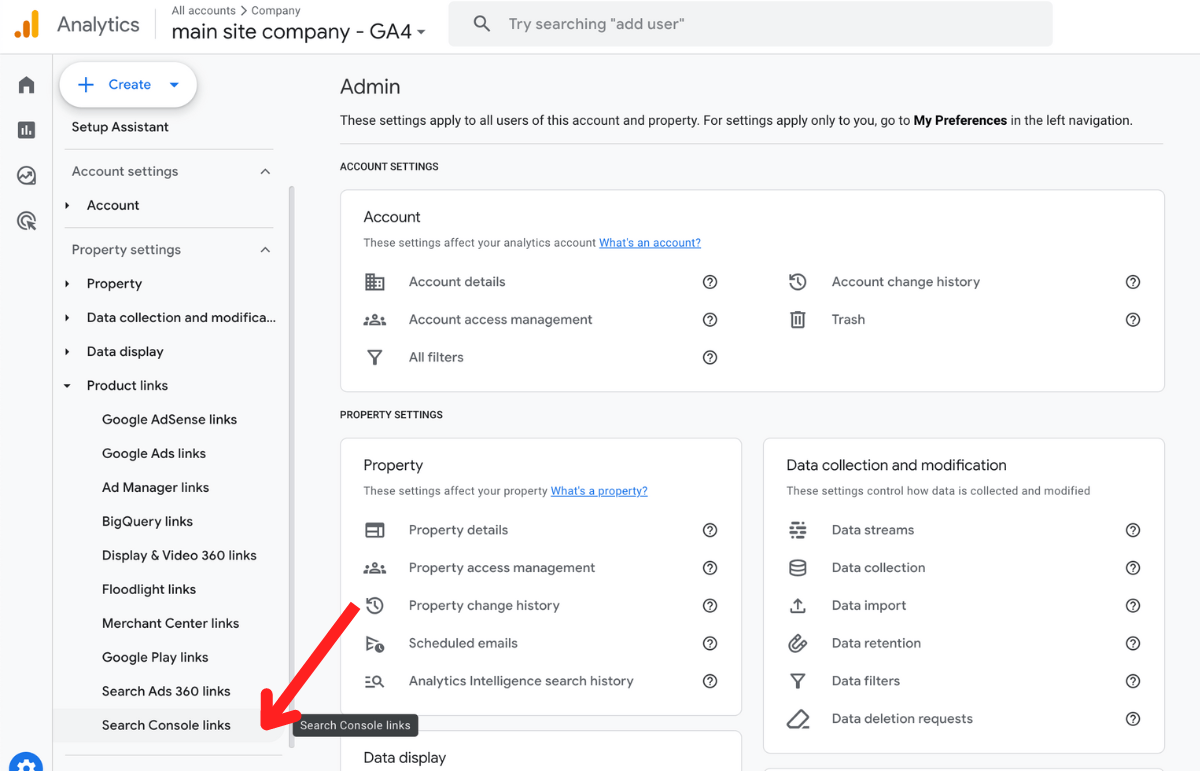
Step 4: Type in the name of the account you want to connect to in the search bar and click Link.
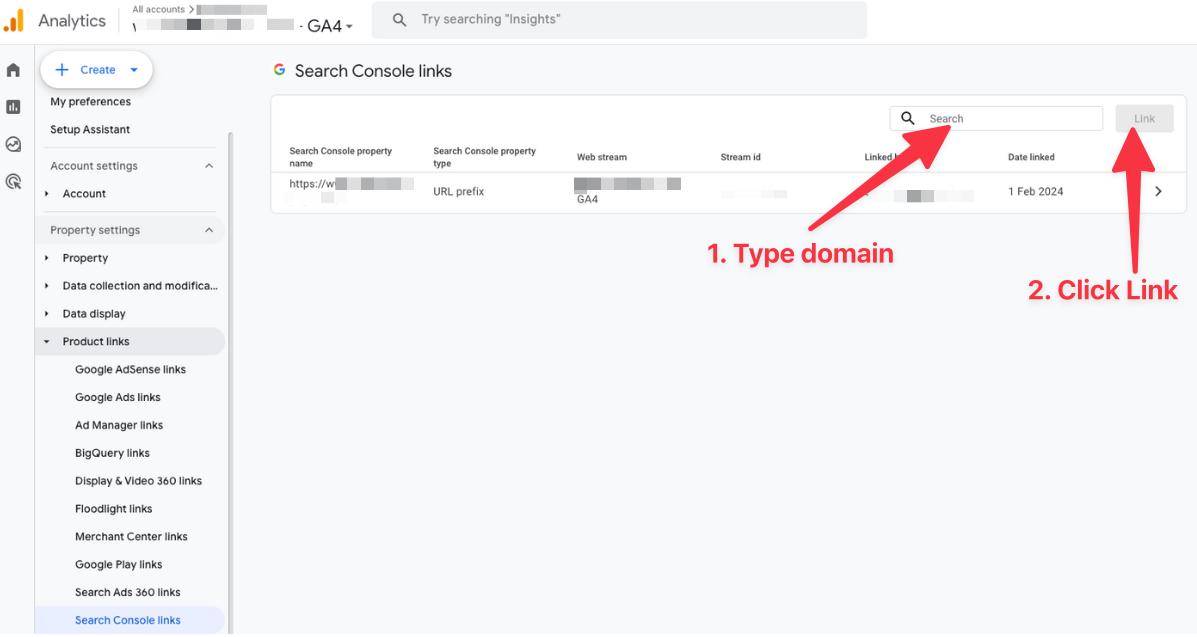
Step 5: Tick the box for the property you want to add, click on Confirm.

Step 6: Select the web data stream associated with your site.
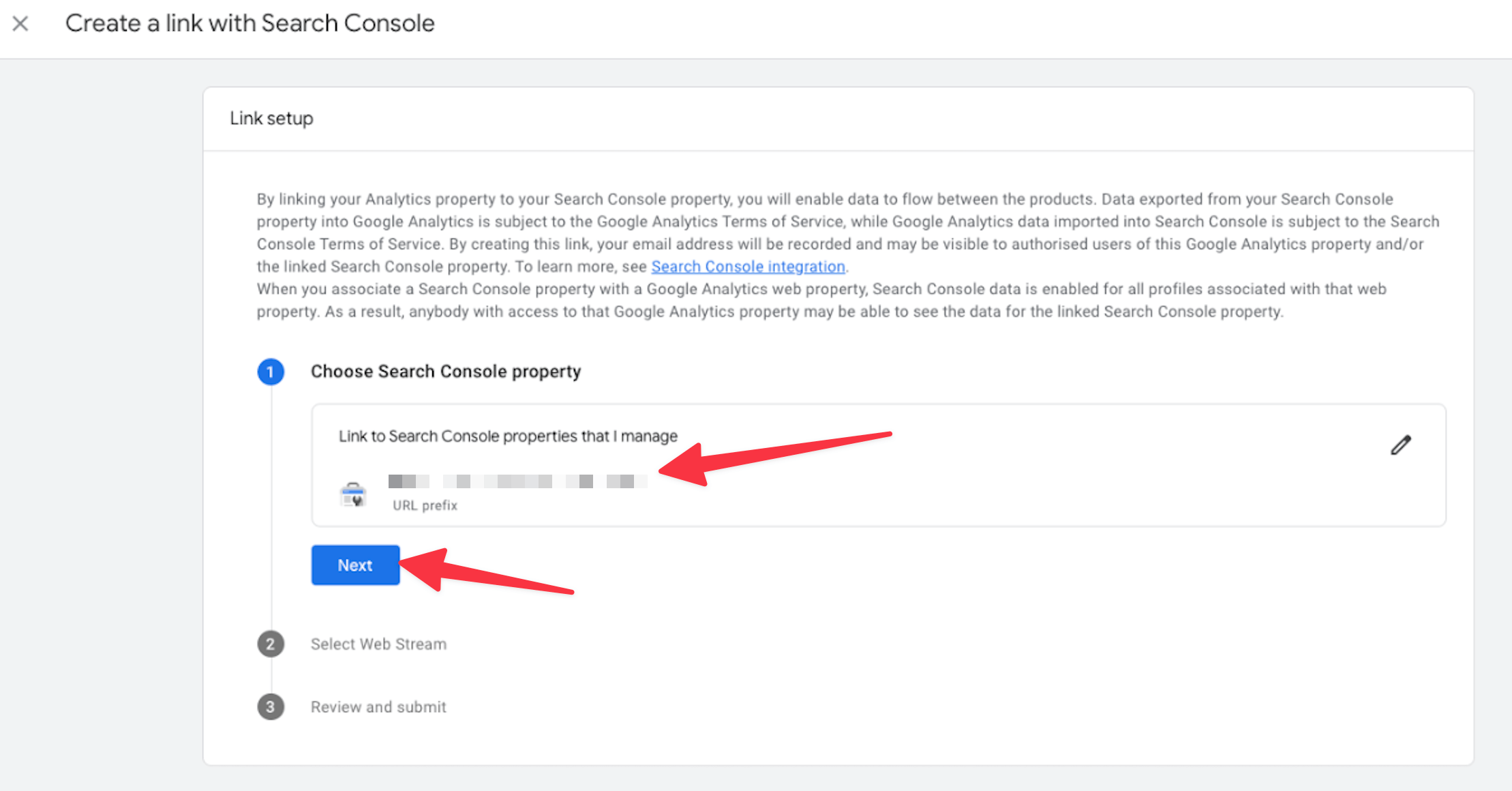
Step 7: Click Next.
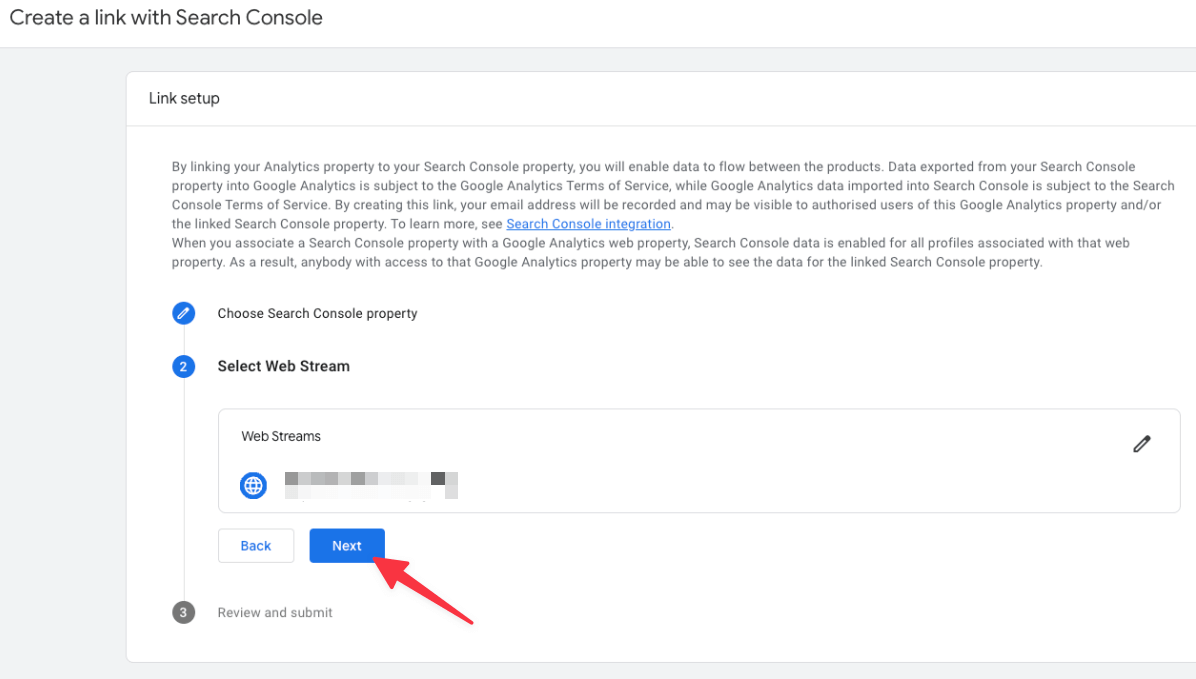
Step 8: Submit your updated settings! All done!
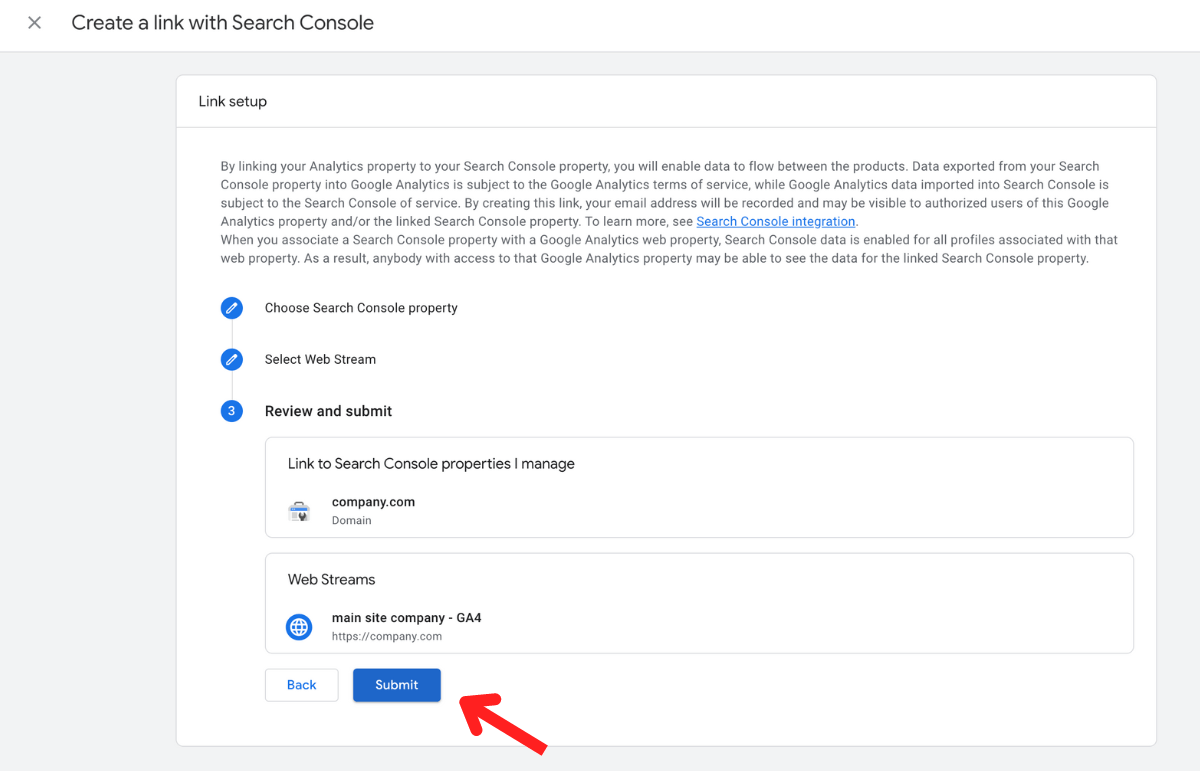
NOTE: If you don’t already have a Google Search Console and Google Analytics account, setting them up should only take a few minutes! Before you begin, you must have a Google account and a valid domain.
Learn more: How to Create a Google Analytics Account
The answer is, why not both? Because each tool serves different purposes, using them together provides the most comprehensive understanding of your online presence.
Connecting Google Search Console to Google Analytics lets you see the whole picture, from how people find your site to what they do once they're there.
This unified view empowers you to make data-driven decisions for your marketing strategies.
Learn more: 🔗 How to Request Access to Google Analytics
Hiring a marketing agency, freelancer, or consultant? Giving them access to your marketing accounts shouldn't require endless emails, confusing permission settings, or sharing login credentials (too risky).
If your agency sent you a long PDF and asked you to navigate Meta Business settings and 5 other social platforms to grant them access, send them over to leadsie.com to automate this part of client onboarding for you.
With Leadsie, you can securely share access to Meta, Google, LinkedIn, TikTok, Shopify, and 14+ other marketing platforms via a secure link in just a few clicks.
✅ Approve only the permissions your agency actually needs
✅ No need to share passwords or sensitive login information
✅ Get campaigns, ads, and marketing projects started faster
✅ Keep account access secure with 100% GDPR and CCPA-compliant workflows
💬 "I never want to do onboarding without Leadsie!" - Alyssa, Meta Ads Manager
🎁 Start your free 14-day trial today —no credit card required.
P.S. It's risk-free, and you get to keep your account connections after the trial ends. 🙌

Nina is an SEO content specialist with expertise in B2B SaaS. She helps businesses increase organic traffic with strategic, high-quality content. Outside of work, you’ll find her sailing somewhere in the Mediterranean.


Clients struggling to share access to their
Google Search Console
accounts? Get the access you need in minutes with a free trial of Leadsie.
Approved by Meta, Google & Tiktok
Keep access to accounts if you cancel
Secure & 100% GDPR compliant
Delete your onboarding PDF. Cancel the video call. Just send one link, and get hassle-free access to 13+ platforms in minutes. Start free today.
Approved by Meta, Google & Tiktok
Keep access to clients' accounts if you cancel
Secure & 100% GDPR compliant
Questions unanswered? Check out our help center or get in touch 🤠
© Leadsie Ltd 2024